
AI Vehicle Health Monitoring in 2026: How Smart Diagnostics Are Reducing Unexpected Car Breakdowns
May 30, 2026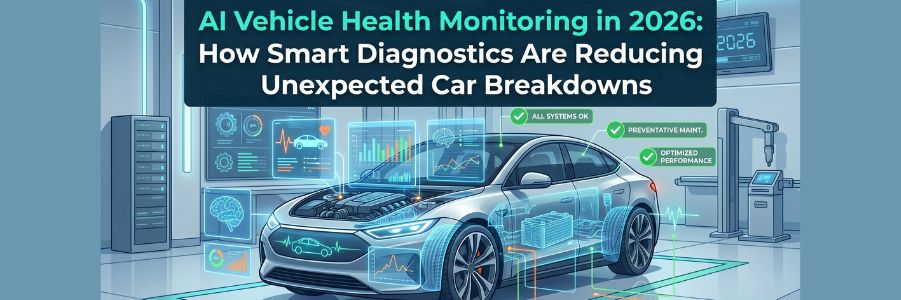
Modern vehicles in 2026 are becoming smarter than ever before. Advanced artificial intelligence systems now help monitor vehicle performance in real time, allowing drivers to detect problems before major failures occur. This new generation of AI-powered vehicle health monitoring is transforming the automotive industry by reducing unexpected breakdowns, improving maintenance scheduling, and helping drivers avoid expensive repairs.
From engine performance tracking to predictive transmission diagnostics, smart monitoring systems are changing how vehicles are maintained. As repair costs continue rising, many drivers are also turning to affordable replacement solutions such as used transmission systems and reliable used engines for sale when major repairs become necessary.
This guide explains how AI vehicle health monitoring works, why smart diagnostics are becoming essential in 2026, and how predictive maintenance is helping reduce unexpected breakdown costs.
What Is AI Vehicle Health Monitoring?
AI vehicle health monitoring uses:
- Artificial intelligence
- Advanced sensors
- Cloud-based diagnostics
- Machine learning
- Real-time vehicle data analysis
to continuously monitor the condition of important vehicle systems.
These systems can track:
- Engine performance
- Transmission behavior
- Battery condition
- Cooling systems
- Brake performance
- Fuel efficiency
- Electrical systems
AI software analyzes driving patterns and mechanical data to detect warning signs before serious failures happen.
Why Vehicle Breakdowns Are More Expensive in 2026
Modern vehicles now contain:
- Turbocharged engines
- Hybrid systems
- Electronic transmissions
- AI-assisted driving features
- Advanced computer modules
Repairing these systems often requires:
- Specialized technicians
- Advanced software tools
- Expensive replacement parts
- Electronic calibration
Even relatively small problems can quickly become costly if ignored.
This is why preventive diagnostics are becoming increasingly valuable.
How Smart Diagnostics Prevent Major Failures
Traditional maintenance relied heavily on:
- Scheduled inspections
- Dashboard warning lights
- Driver observation
AI diagnostics now provide much earlier detection.
Modern systems can identify:
- Transmission slipping
- Engine overheating
- Sensor irregularities
- Fluid degradation
- Abnormal vibration patterns
- Battery weakness
before complete component failure occurs.
Why AI Monitoring Is Important for Engines
Engine failure remains one of the most expensive vehicle repairs.
AI systems now monitor:
- Oil pressure
- Combustion efficiency
- Fuel delivery
- Engine temperatures
- Timing system behavior
If abnormalities appear, the system can alert drivers immediately.
Early intervention often prevents catastrophic engine damage that would otherwise require replacement with:
- Rebuilt engines
- New engines
- Used engines for sale
Transmission Monitoring Is Becoming More Advanced
Modern transmission systems are highly electronic and increasingly dependent on software.
AI transmission diagnostics can detect:
- Delayed shifting
- Torque converter problems
- Clutch wear
- Pressure inconsistencies
- Overheating risks
- Electronic communication errors
Early detection helps drivers avoid sudden transmission failure.
In severe cases, affordable replacement options such as a used transmission may provide a cost-effective repair solution.
Why Predictive Maintenance Matters
Predictive maintenance allows repairs to happen before breakdowns occur.
Benefits include:
- Reduced repair costs
- Fewer roadside breakdowns
- Improved vehicle reliability
- Longer vehicle lifespan
- Better fuel efficiency
AI systems can analyze thousands of data points every second, making maintenance decisions more accurate than traditional inspections.
Smart Sensors Are Changing Vehicle Repairs
Modern vehicles now use sensors throughout critical systems.
These sensors monitor:
- Temperature
- Pressure
- Vibration
- Fluid quality
- Electrical communication
- Mechanical wear patterns
The AI system processes this information continuously to detect potential failures.
Why Hybrid and EV Vehicles Depend on AI Diagnostics
Hybrid and electric vehicles rely heavily on software integration.
AI monitoring systems help manage:
- Battery health
- Regenerative braking
- Electric motor performance
- Cooling systems
- Power distribution
Without advanced diagnostics, identifying problems in these systems would be far more difficult.
Benefits of Early Transmission Detection
Transmission repairs are becoming more expensive each year.
AI diagnostics help prevent:
- Gear slipping
- Complete transmission failure
- Excessive overheating
- Electronic shifting problems
Catching issues early may eliminate the need for major repairs or replacement with a used transmission unit.
Why Drivers Are Keeping Vehicles Longer
In 2026, many drivers keep vehicles longer because:
- New vehicle prices are increasing
- Interest rates remain high
- Automotive technology costs more to replace
As a result, maintenance and repair planning are becoming more important than ever.
AI diagnostics help extend vehicle lifespan significantly.
How Used Engines Help Reduce Repair Costs
Even with predictive maintenance, some engines eventually fail due to:
- High mileage
- Overheating
- Poor maintenance history
- Internal wear
Affordable used engines for sale provide many drivers with a practical replacement option that restores vehicle performance while reducing overall repair costs.
Low-mileage OEM used engines often deliver excellent value.
Why AI Systems Improve Repair Accuracy
AI diagnostics reduce guesswork during repairs.
Technicians can:
- Identify problems faster
- Reduce unnecessary repairs
- Improve repair precision
- Diagnose intermittent issues more accurately
This saves both:
- Time
- Labor costs
for vehicle owners.
Common Causes of Unexpected Breakdowns
Many vehicle breakdowns result from:
- Ignored warning signs
- Delayed maintenance
- Fluid neglect
- Sensor failures
- Overheating
- Transmission wear
AI monitoring systems help identify these issues before complete failure occurs.
Cloud-Based Diagnostics Are Growing
Many modern vehicles now use:
- Cloud-connected monitoring systems
- Mobile maintenance alerts
- Remote software diagnostics
Drivers can receive maintenance notifications directly through:
- Smartphone apps
- Vehicle dashboards
- Service center integrations
This improves maintenance convenience significantly.
Why Fleet Companies Use AI Monitoring
Commercial fleets increasingly depend on predictive diagnostics because they help:
- Reduce downtime
- Prevent expensive repairs
- Improve fuel efficiency
- Extend fleet lifespan
- Lower operational costs
AI monitoring is becoming standard in commercial transportation management.
Environmental Benefits of Predictive Maintenance
Preventing major failures helps reduce:
- Vehicle waste
- Manufacturing demand
- Scrap component disposal
- Fuel inefficiency
Using:
- Recycled parts
- Used transmissions
- Used engines for sale
also supports more sustainable automotive repair practices.
Future of AI Vehicle Monitoring
Experts expect future systems to include:
- Fully automated diagnostics
- AI repair scheduling
- Self-monitoring engine systems
- Real-time roadside assistance integration
- Predictive component replacement alerts
Vehicle maintenance will continue becoming more intelligent and automated.
Why Smart Maintenance Is Essential in 2026
Modern vehicles are too advanced for reactive maintenance alone.
AI health monitoring now helps drivers:
- Prevent major breakdowns
- Improve reliability
- Reduce repair expenses
- Maintain vehicle safety
Smart diagnostics are becoming one of the most important tools in modern vehicle ownership.
Final Thoughts
AI vehicle health monitoring is transforming automotive maintenance in 2026 by helping drivers detect problems earlier, reduce repair costs, and prevent unexpected breakdowns.
From real-time engine analysis to predictive transmission diagnostics, smart monitoring systems are improving vehicle reliability across modern transportation systems.
When major repairs become necessary, affordable solutions such as used transmission systems and reliable used engines for sale continue helping drivers restore vehicle performance while controlling repair expenses.
As automotive technology evolves, AI-powered diagnostics will play an increasingly important role in keeping vehicles safer, more efficient, and more reliable for years to come.